Adam Djourescu
Impure BloodAdam Djourescu is a gifted police officer whose rise in the Nice unit is shadowed by a decisive act of wartime betrayal: he participated in the arrest of Jews, then was himself denounced and deported with his family. The revelation that he had secretly saved a newborn Jewish child, Jean Florian, turns his story from a grim record of complicity and persecution into the buried origin of a later generation’s identity and trauma.
Identity and Police Career
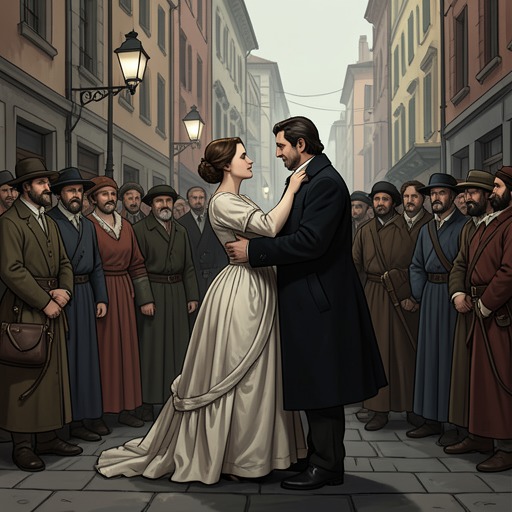
Adam was a contemporary of Vincent Dantier at the Caserne. In Vincent’s memory, Adam was the unit’s golden boy: bright, accomplished, and repeatedly ahead of his rival. He won the André Fonsec Medal in 1941, beating Vincent to the honor and, as the later confrontation puts it, beating him to everything. The distinction marks both Adam’s professional promise and the envy that would shape Vincent’s conduct toward him.
A wartime arrest record underscores Adam’s complicated position. A family entry identifies Adam, Elena, and their young daughter Olivie as having been arrested and deported on 10 October 1943, after the Djourescus had been arrested and sent away within a single working day. Investigators initially read the evidence as showing that Vincent had arrested Adam himself. The report corrects that assumption: a Gestapo unit carried out the arrest, acting on an informant’s tip. The informant is not named, but the file’s oblique reference to “287” points the investigators toward the number’s significance and keeps the question of individual responsibility alive.
Betrayal, Guilt, and Deportation
Adam’s history also reaches back to the roundup of 1942. He felt guilty about it and confided that guilty secret to his friend Vincent. The disclosure matters because it ties Adam’s moral burden to the man who would later betray him: Vincent knew both Adam’s conscience and his vulnerability, yet eventually supplied the information that exposed the family. During the later reckoning, Vincent’s recollection reduces the old rivalry to its bitter essentials—Adam’s success, his own resentment, and Adam’s Jewish identity.
The deportation record exposes the terrible irony of Adam’s earlier position. He had been one of the arresting officers in the summer before the 1943 deportation, the “commended one” and high flyer, as the investigators recognize. The record suggests that Adam paid for arresting people of his own kind, while his family suffered with him. Yet the narrative does not make his fate a simple equation of punishment and justice: his earlier complicity, his guilt, and his own family’s persecution remain distinct parts of the history.
The arresting force was the Gestapo, not Vincent acting in person. But the later evidence identifies a tip-off, and Vincent’s remembered secret supplies the personal connection behind the file’s coded clue. The distinction between carrying out the arrest and informing on Adam is crucial: it corrects the investigators’ first reconstruction without absolving the betrayal that placed the family in danger.
The Newborn and the Lost Child
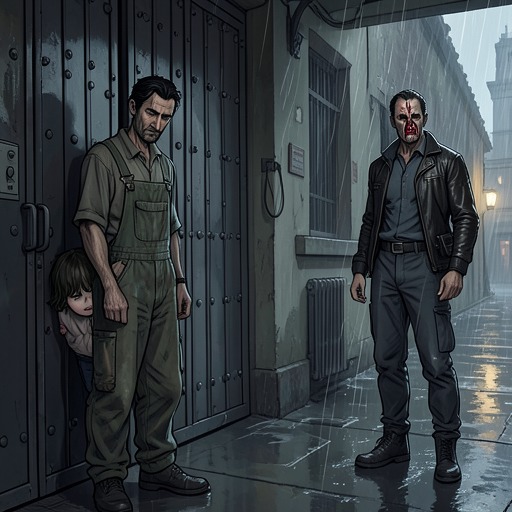
Madame Laseige’s account gives the deportation a domestic, intimate scale. The families lived on the top floor. She had helped when Louise Florian gave birth to a premature baby who was stillborn; only hours later, Elena gave birth to a healthy boy. When the soldiers arrived, Adam ran past Laseige on the landing toward Louise and Marcel’s apartment, carrying his newborn son. As the soldiers climbed toward the top floor, he ran back to his own apartment carrying a bundle again—but this time it was no longer squirming. The soldiers took the Djourescus to the trains, and Laseige never saw them again.
This testimony overturns a crucial detail in an earlier report, which had attributed the premature, dead baby to Elena. The correction clarifies what Adam did in the moments before the family was seized: he carried the stillborn child back to his own apartment and left the living newborn with the Florians. His action is conveyed not as an explanation or a confession but through the witness’s remembered movements, the two bundles, and the difference between one that moved and one that did not.
The child’s survival later becomes legible through dates. The investigators connect Olivie, the Djourescus’ daughter, to Corinne Delage, the child known as the “lost lamb” at the Grandeville farmhouse. They recognize that 10 October 1943, the date of the Djourescus’ deportation to Drancy, was also the date recorded on Corinne’s re-registered birth certificate as her date of birth: 10 October 1940. The Groismonts had preserved the day Olivie’s life began again as her birthday. The parallel does not establish Adam as the child’s father or explain every stage of the child’s survival; it identifies the deportation date as a second beginning in the family’s history.
Jean Florian and the Inherited Secret
Adam’s newborn son was Jean Florian, whose Jewish birth was disclosed to him years later by his brother Emil. In a hateful letter, Emil told Jean that he was not a true Florian and had been given away at birth. He named Adam and Elena Djourescu as Jean’s real parents and said their betrayal by a fellow officer had sent them to Auschwitz. Emil did not know the informant’s full identity; he knew only the forename Vincent. Jean passed the revelation on to his own son, David, because David deserved to know what had happened to his true grandparents.
For Jean, the secret made sense of the rejection he had experienced in the Florian household after Emil arrived. It also helped him recognize how he had repeated that cruelty in the way he treated his wife and son. He had not blamed his wife for leaving or for returning to her maiden name, Jarret, and he did not blame her or David for hating him. By the time he understood the history, his wife had died, but David—an estranged and neglected son—still represented a possible chance of redemption. Jean had sought to win him back, not to avenge the original crime; David, however, had evidently pursued a different purpose.
Legacy and Narrative Significance
Adam’s story emerges across separated forms of evidence: a police list, a wartime deportation record, a neighbor’s eyewitness account, and the recollections of Vincent and Jean. Each supplies a correction or a consequence. The file overturns the assumption that Vincent personally made the arrest; Laseige’s testimony corrects the account of which baby died; the birth dates show how a child’s identity was restarted; and Jean’s memories reveal how the concealed history shaped a family long after the deportations.
The pattern is not a clean passage from victimhood to innocence. Adam is remembered as a police officer who participated in the arrest of Jews and carried guilt from the 1942 roundup; he is also a Jewish man whose own family was deported after an informant’s tip, and a father who acted to preserve a newborn child. Those facts place him at the junction of obedience, complicity, betrayal, and rescue. His absence from the later investigation is precisely what gives the recovered details their force: through them, the past remains active in the identities and choices of Vincent, Jean, and David.